
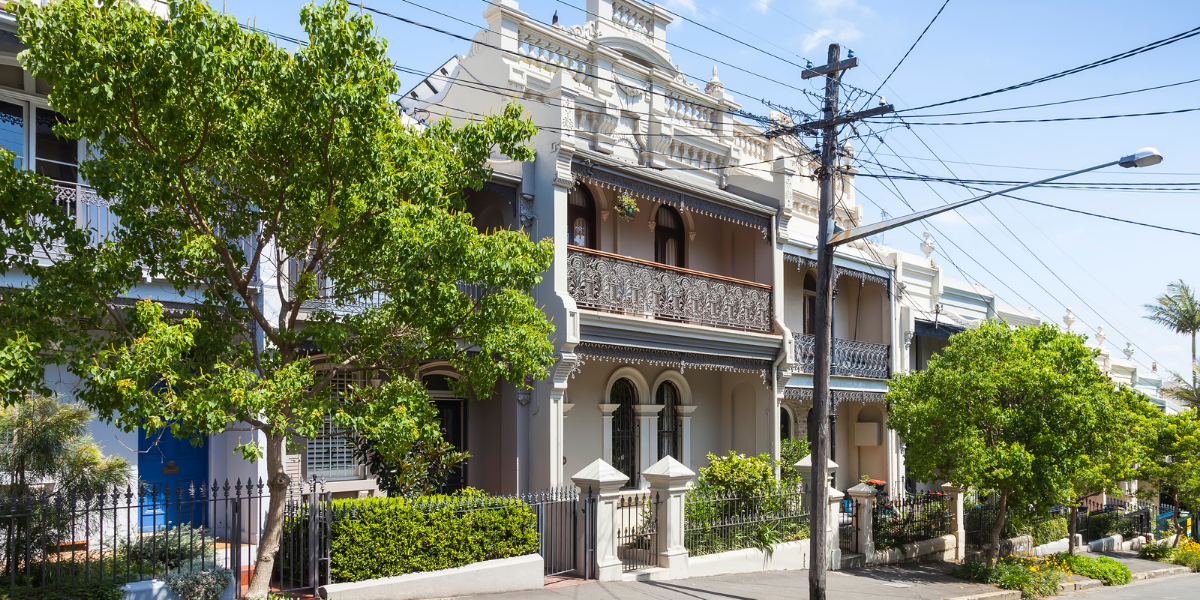
My parents’ and grandparents’ generation were able to purchase their own homes. They worked hard, lived simpler lives and made sacrifices, but it was achievable. Why has this changed for young people today?
A clue can be found in this graph of house prices against annual income.
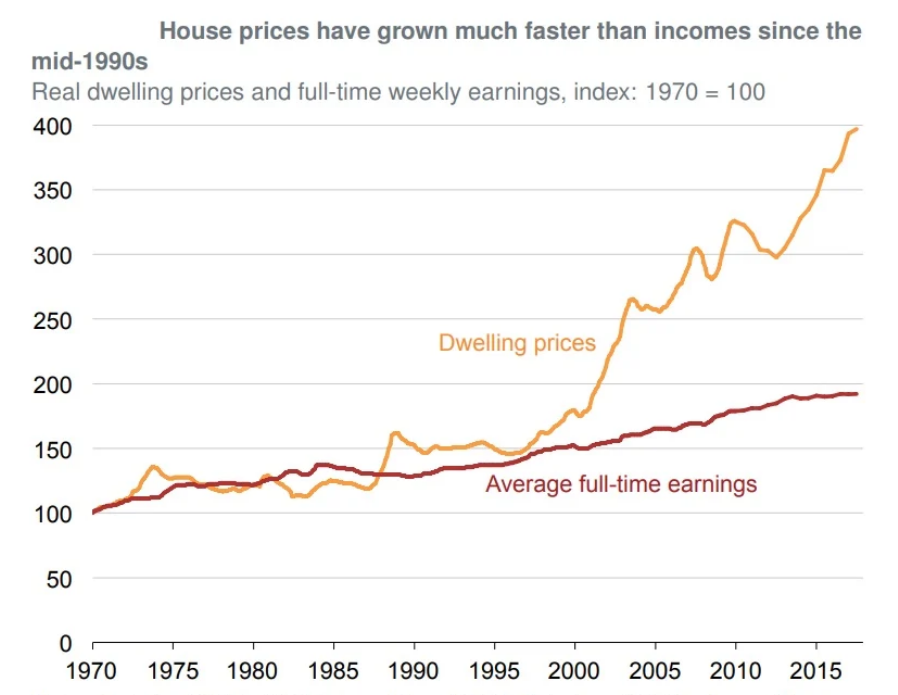
(source: https://www.businessinsider.com.au/chart-australian-wages-house-prices-2018-3)
Home prices are now more than twice as expensive than they were in 1970, compared to inflation-adjusted full-time earnings. No wonder young people are stuck with avocado!
As a party, we want everyone who puts in the effort to be able to own their home—not just the rich. We believe that a person on a full-time minimum wage should be able to afford a home.
Currently, a person working 38 hours on an Australian full-time minimum wage earns approximately 40k a year. The median national property price is approximately 550k per year, or 13.75 annual incomes.
If a person working full-time on minimum wage were to live frugally on $400 a week, this would leave them around 14k a year after tax. So, assuming this person saved well, didn’t raise a family, get sick, or go on expensive holidays, they’d have a 20% deposit in about 8 years, and then spend the next 30 years paying the mortgage off.
Does this oversimplify the issue? Of course - this article is not meant to be a detailed analysis, but rather to highlight the significant problem that needs addressing.
So, what has caused this problem? While lower interest rates have contributed, a large part of the problem is supply and demand. Over the last 30 years, we have had consistent population growth, a reduction in the average number of people per dwelling, and an insufficient supply of housing to the market to limit the price increases. Compounding this is that the Government has a vested interest in keeping housing prices high, as many Australians own homes and don’t want to see their value decrease.
How do we fix the problem? It’s complicated, but looking at increasing supply and decreasing demand seems a good place to start. To decrease demand we could place restrictions on overseas investment, change tax structures around investment properties, or encourage an increase in the number of people per dwelling. On the supply side, we could increase the construction of affordable housing, release more land, encourage high-density construction, and improve our infrastructure to allow for these developments.
The price of a home is exorbitant for my generation, but it need not be so for our children.