A Better Gig For Workers

Industrial relations need reform. Australia has inherited a system that served us well in the past, but which has not been adapted to the internet and what has become the gig economy. Today, many people work in the gig economy, where they are paid for small jobs done on demand, often for very low rates of pay. Examples of businesses using this model include Uber, UberEats, Upwork, and many more.
The dramatic increase in these types of jobs creates challenges for businesses and regulators. If you are a business in today’s world wanting a task completed, there are basically three options:
1. Full or part-time employees— This is the traditional system designed for long term employment. This system offers the highest level of security for long term employees but is inflexible for employers.
2. Casual employees— This offers increased flexibility for employers, with reasonable compensation for employees.
3. Contractors (including gig economy workers)— If workers are employed as a contractor, they are treated as running their own business. Consequently, there are very few controls placed on the hours worked, the amount paid, or the conditions under which they work.
These classifications have worked well in the past, but currently create problems for business workers and business owners. For example, full-time, part-time, and casual workers have a number of restrictions placed on their employment. These conditions usually work to protect the employee from exploitation, but sometimes can be counterproductive. For example, a common restriction is a 3-hour minimum work period. This works well in retail to protect employees from unreasonably short shifts but can be an obstacle in some other kinds of work.
I used to run a tutoring business that sent tutors to the student's home, usually for one hour sessions. If I were to employ someone rather than hire a contractor, I would need to pay minimum wage for the full three hours. This is obviously impractical and consequently, even if I wanted to choose a different system, I’m forced to take these workers on as contractors.
Contracting worked well for my tutors, as it allowed them to be independent, flexible, and choose their own hours, and the hourly rate accounted for travelling and the fact that they were responsible for all their own business expenses. But in some situations, this system can become exploitative. When workers are treated as running an independent business, there are no protections on minimum wage, no protections on working conditions, and no job security.
The lack of minimum wage can lead to an unrestricted race to the bottom. Employers in a non-unionised industry have significantly higher bargaining power than employees, resulting in a strong downward pressure on pay. I have spoken to tutors within the last few years who have been paid as little as $20 for an hour session of tutoring, which also includes unpaid travel, prep, and admin.
For many people, the gig economy is the reality of work. These people are your drivers, cleaners, and tutors, and we need to ensure that they get a fair go. The current system denies these workers reasonable wages and conditions. We in the Common Good believe this is not acceptable. Workers must have fair work, fair pay, and businesses wanting to provide reasonable conditions need to be able to compete on a level playing field.
This is a complicated problem to fix. One suggestion that may help is creating a new category of employment such as an “Independent Worker”. If done right, this would allow workers to engage in newer forms of labour that are genuinely profitable, but provide them with a minimum standard of pay and appropriate protection.
Our economy has irreversibly changed and we must adapt to it. The exploitation must end.
Why Australia Needs The Common Good

Australians are increasingly polarised, politicised and fed up. In a world where shared sources of meaning and belonging (like families, churches and local community organisations) have been eroded, we turn to politics as the last remaining source of meaning.
This has a bunch of consequences: people get disillusioned with politics (pollies are all corrupt, politics doesn’t change anything); people sell their soul to politics (QAnon anyone?); and political parties politicise everything, leaving bipartisanship and a quest for the common good as pipe dreams from the past.
This leaves us in a situation where our supposedly free-market loving government props up a dying coal industry despite proof that it contributes to a dangerously changing climate, where we lock up asylum seekers for years on end in offshore detention that costs taxpayers ridiculous amounts of money while being reprimanded by the UN for human rights violations, where we have progressive state governments pushing anti-liberal policies that make practices including prayer and conversation illegal despite significant concerns from the medical community (not to mention religious communities)...
You might agree, it’s a world gone mad.
The vision of the Common Good Party is simple:
Freedom to live from conviction. Care for the vulnerable—including asylum seekers and the unborn. Forward-thinking policies based on scientific consensus, particularly around climate change and the environment. An economy that works for Australians, including housing reform so that every Australian can own a home.
To simplify even further, it’s about responsibilities as well as rights. Love as well as liberty.
We love Australia, and there’s so much goodness that needs preserving—from our reefs and rainforests to our families and shared cultural ideals (like the idea that “for those who've come across the seas, we’ve boundless plains to share").
But Australia also has some big challenges facing us, like climate change, political polarisation and an economy that increasingly serves those at the top while leaving the average Aussies behind.
And there’s so much that’s just stupid. Like who came up with the idea that conservatives should be sceptical about climate change?! (Surely this world is worth conserving). And why on earth do progressives, who love advocating for the rights of the powerless, totally abdicate care for the most-silenced group in history, unborn children?
The Common Good hopes to be a voice of reason, compassion and conviction in this mad political world. On core policy issues, we go beyond left and right, to find policy solutions that seek the common good.
If you, like us, step up to the ballot box every four years and wish you had some better options, now’s your chance to be a part of creating one.
If you wish you could vote pro-life for the lives of the unborn but also the lives of asylum seekers and those living in poverty, join The Common Good. If you wish you could vote for religious freedom and free speech but also for urgent climate action, join The Common Good.
Once you’ve joined, how else can you help?
Our immediate goal is to get 750 members in NSW by November 2021. That’s the deadline to register in order to contest the next NSW election in 2023. We also need members from all over Australia, so we can register Federally and contest elections in other states.
Help us get there by:
- Staying in touch: join our email list and like the Facebook page for updates
- Introducing us to your friends
- Donating, and
- Getting involved through volunteering your time and skills.
For The Young, Home Owning Is Only A Dream
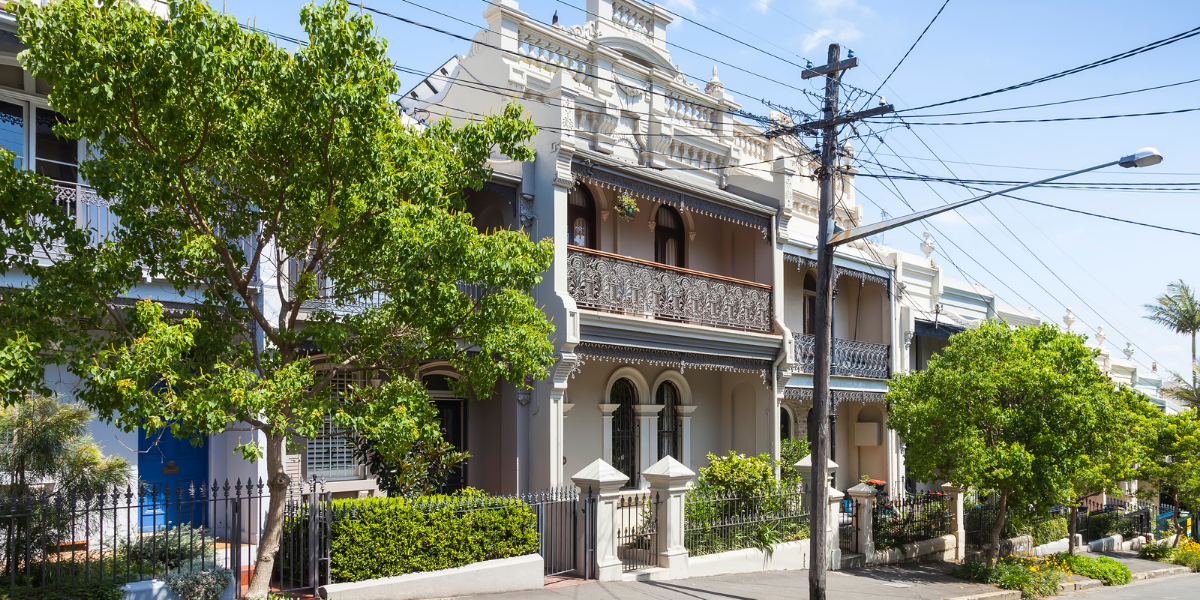
My parents’ and grandparents’ generation were able to purchase their own homes. They worked hard, lived simpler lives and made sacrifices, but it was achievable. Why has this changed for young people today?
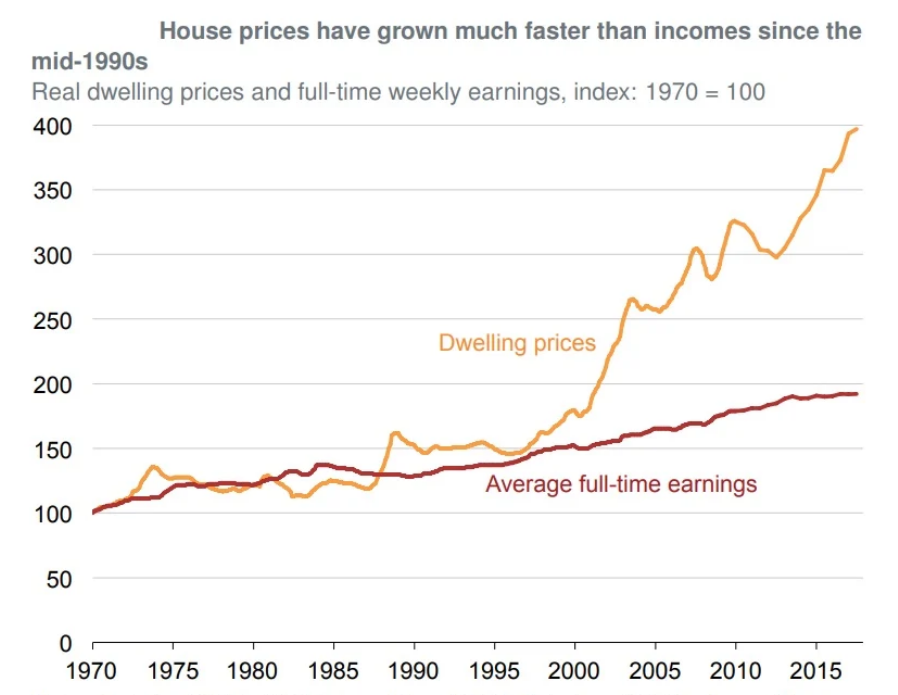
A clue can be found in this graph of house prices against annual income.
(source: https://www.businessinsider.com.au/chart-australian-wages-house-prices-2018-3)
Home prices are now more than twice as expensive than they were in 1970, compared to inflation-adjusted full-time earnings. No wonder young people are stuck with avocado!
As a party, we want everyone who puts in the effort to be able to own their home—not just the rich. We believe that a person on a full-time minimum wage should be able to afford a home.
Currently, a person working 38 hours on an Australian full-time minimum wage earns approximately 40k a year. The median national property price is approximately 550k per year, or 13.75 annual incomes.
If a person working full-time on minimum wage were to live frugally on $400 a week, this would leave them around 14k a year after tax. So, assuming this person saved well, didn’t raise a family, get sick, or go on expensive holidays, they’d have a 20% deposit in about 8 years, and then spend the next 30 years paying the mortgage off.
Does this oversimplify the issue? Of course - this article is not meant to be a detailed analysis, but rather to highlight the significant problem that needs addressing.
So, what has caused this problem? While lower interest rates have contributed, a large part of the problem is supply and demand. Over the last 30 years, we have had consistent population growth, a reduction in the average number of people per dwelling, and an insufficient supply of housing to the market to limit the price increases. Compounding this is that the Government has a vested interest in keeping housing prices high, as many Australians own homes and don’t want to see their value decrease.
How do we fix the problem? It’s complicated, but looking at increasing supply and decreasing demand seems a good place to start. To decrease demand we could place restrictions on overseas investment, change tax structures around investment properties, or encourage an increase in the number of people per dwelling. On the supply side, we could increase the construction of affordable housing, release more land, encourage high-density construction, and improve our infrastructure to allow for these developments.
The price of a home is exorbitant for my generation, but it need not be so for our children.